

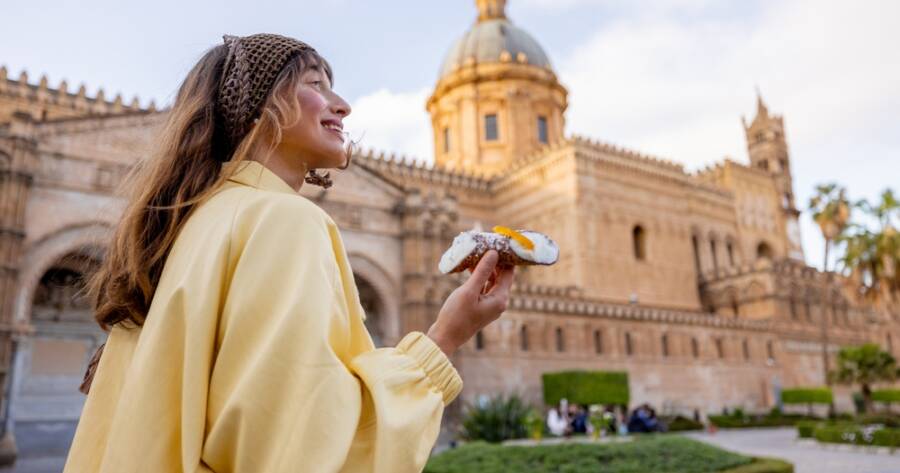
Many American travelers pack multiple countries into a single trip, racing between airports and landmarks without ever truly arriving anywhere. Slowing down and planting roots in a single city for a month offers something fundamentally different. It can truly be a richer, cheaper, and more meaningful way to see the world.
The Case Against the Whirlwind Tour
The classic multi-country sprint has an undeniable appeal on paper. Crossing off destinations feels productive, and the highlight reel looks impressive on social media. But the reality of constant movement is often exhausting, expensive, and surprisingly shallow. Every new city requires fresh orientation, new transportation logistics, and the constant low-grade stress of packing, unpacking, and navigating unfamiliar transit systems.
The financial toll alone is worth reconsidering. Transportation frequently becomes the single largest expense when travelers move rapidly from place to place (source). A day spent in transit can cost two or three times more than a day spent simply living in one location (source). Those dollars add up fast, eating into the budget that could otherwise fund better accommodations, more memorable meals, or genuine local experiences.
What Slow Travel Actually Means
Slow travel is not about moving lazily or being unambitious. It is about choosing depth over breadth — trading a checklist of countries for a genuine relationship with one place. Spending an extended period in a single city allows a traveler to move past the tourist surface and begin to understand how daily life actually works there. The neighborhood bakery becomes familiar, the shortcut through the park becomes second nature, and the locals at the corner café start nodding hello.
This kind of connection is not accidental. Staying longer in one destination gives travelers the opportunity to build real relationships, understand local customs, and engage with a community on a much deeper level than any fleeting visit allows (source). That experience is qualitatively different from snapping photos at a landmark and boarding the next flight.
The Budget Math Works in Slow Travel’s Favor
Travelers who commit to a single city for a month tend to unlock significant savings that rapid movers never access. Monthly apartment rentals cost dramatically less per night than hotels. Grocery shopping at local markets replaces expensive restaurant meals for every lunch and dinner. Transit passes replace daily rideshare charges. The rhythm of ordinary life in a foreign city is, paradoxically, far more affordable than the tourist circuit.
The growth of digital nomad visas around the world reflects this reality. Over 30 countries have introduced special visa programs designed for people who want to stay longer than a traditional tourist visa allows (source). Governments recognize that long-stay visitors contribute more sustainably to local economies than transient tourists who move on within days.
A Lighter Environmental Footprint
The environmental argument for slow travel is equally compelling. Transport accounts for at least 70% of the carbon emissions generated by a typical vacation, making it by far the most impactful variable in a trip’s environmental cost (source). A single long-haul flight can generate more emissions than a standard car driven for an entire year (source). Every additional flight booked in the name of “seeing more” compounds that environmental cost considerably.
Choosing one destination and staying put eliminates most of those additional flights entirely. When travelers do need to move regionally, ground-based options like trains carry a far lighter footprint — European rail travel, for example, produces emissions up to ten times lower than flying the same route (source). Eating locally and seasonally while staying in one place further reduces impact and channels money directly into the surrounding community (source).
The Memories That Actually Last
There is a psychological dimension to slow travel that deserves honest attention. The memories travelers carry home from a multi-country sprint are often blurred together — a cascade of landmarks that lose individual texture over time. By contrast, the experiences that stay vivid for years tend to come from places where a traveler spent real time, not just a day or two passing through (source).
Authenticity plays a role here too. Roughly 90% of travelers report wanting a more deliberate, immersive, and sustainable experience when they travel (source). And a substantial share — nearly 43% — say they are prepared to spend more to make that kind of travel happen (source). The desire for something more meaningful than airport lounges and rushed sightseeing is clearly widespread.
Why You Should Learn More About Slow Travel
Slow travel rewrites the logic of what a great trip should look like. Rather than measuring success by the number of passport stamps collected, it measures success by the quality of what was actually felt and understood along the way. A month in one city delivers cultural depth, financial savings, reduced environmental impact, and the kind of lasting memories that a whirlwind tour rarely produces. For American travelers rethinking their approach to international adventures, the evidence points clearly in one direction: staying longer in fewer places is not settling for less — it is choosing something far more valuable.