

Some hikes are memorable because they are beautiful. Others become legendary because they demand everything: strength, patience, planning, weather awareness, and the ability to keep moving when the trail gets uncomfortable. The world’s toughest long-distance routes attract hikers because they offer more than scenery. They cross high passes, remote valleys, desert corridors, alpine weather, and cultural landscapes that cannot be understood from a road. The top trails are not casual vacations; they are full-body travel experiences.
What Makes A Long-Distance Trail Truly Demanding
A demanding trail is not defined by mileage alone. Some routes are hard because they climb and descend thousands of feet every day. Others are hard because of altitude, heat, exposure, limited services, isolation, or fast-changing weather. The most serious treks often combine several of these pressures at once.
For U.S. travelers, these hikes also require more preparation than a domestic weekend trip. Travel logistics, permits, hut bookings, guides, language differences, and emergency planning can shape the experience as much as the trail itself. A strong hiker may still struggle if they underestimate altitude, weather, pack weight, or the mental challenge of walking for many days in a row.
GR20, Corsica
The GR20 in Corsica is often described as one of Europe’s toughest classic treks. It crosses the island’s mountain spine between Calenzana and Conca, with rough terrain, steep climbs, rocky sections, and exposed ridgelines. The full route is about 180 kilometers with major elevation gain and loss, making it much more demanding than the distance alone suggests.
What makes the GR20 stand out is its constant physical pressure. Hikers deal with granite slabs, loose rock, steep descents, and weather that can shift from intense heat to storms. It is not a trail for people who want gentle paths and easy village walking. The reward is a raw Corsican landscape of peaks, lakes, forests, and mountain refuges that feels far removed from the island’s beach image.
Tour Du Mont Blanc, France, Italy, And Switzerland
The Tour du Mont Blanc draws hikers from around the world because it circles one of Europe’s most famous mountain areas while crossing three countries. The classic route covers about 170 kilometers and includes roughly 10,000 meters of cumulative elevation gain. That combination of distance and climbing creates a serious multi-day challenge even though the route is well known and well supported.
The trail’s difficulty comes from daily repetition. A hiker may climb to a high pass, descend into a valley, sleep in a refuge or village, and then do it again the next day. Weather can also complicate the route, especially on exposed sections. The appeal is clear: few hikes combine big alpine scenery, international culture, mountain huts, and long-distance endurance in such a compact route.
Everest Base Camp, Nepal
The Everest Base Camp trek is not the longest route on this list, but altitude makes it one of the most serious. The trek is high on the priority list for trekkers, and the common route starts and ends at Lukla over roughly two weeks. The destination sits in the Khumbu region, where the thin air turns normal hiking into a slower and more careful effort.
This trek demands patience more than speed. Hikers need time to adjust to elevation, and rushing can create real risk. The reward is a route through Sherpa villages, Buddhist monasteries, suspension bridges, glacial valleys, and views of some of the highest mountains on Earth. For many hikers, reaching base camp is less about a summit and more about standing inside one of the world’s most famous mountain landscapes.
Cordillera Huayhuash Circuit, Peru
The Cordillera Huayhuash Circuit in Peru is a high-altitude route through one of the Andes’ most dramatic mountain ranges. The classic circuit is known for remote camps, glacial lakes, sharp peaks, and multiple high passes. One demanding alpine version is described as an eight-day route with about 65 kilometers of distance and 5,000 meters of ascent and descent.
This trek is difficult because the body rarely gets a break from altitude. Camps can be high, passes can feel punishing, and the remoteness means hikers must be prepared for cold, fatigue, and limited access to help. The scenery, however, is enormous: blue lakes, white peaks, open valleys, and a sense of scale that makes the effort feel meaningful. It is the kind of trek that rewards careful pacing and respect for conditions.
The Jordan Trail, Jordan
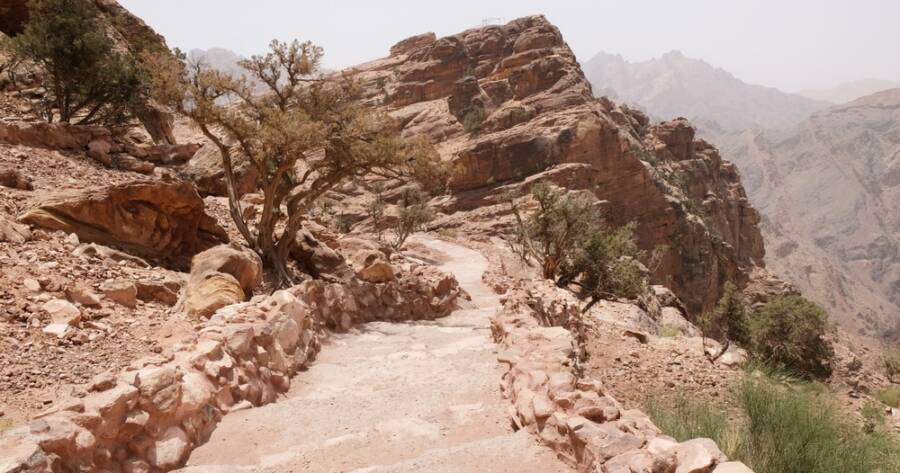
The Jordan Trail is demanding in a different way from alpine routes. Instead of glaciers and high passes, it offers desert heat, dry distances, rocky canyons, cultural encounters, and long exposure between towns. The trail runs from Um Qais in the north to Aqaba in the south, covering more than 675 kilometers over about 35 days and passing through more than 75 villages and towns.
Its challenge is endurance across changing terrain. Hikers move through hills, wadis, desert landscapes, old routes, and historic areas that connect many layers of Jordan’s culture. Water planning, heat management, navigation, and local logistics matter deeply. The trail is especially powerful because it is not only a physical crossing; it is also a journey through communities, hospitality, ruins, and landscapes that shift day after day.
Overland Track, Tasmania
The Overland Track in Tasmania is shorter than some routes on this list, but it earns its place because conditions can be serious. It is a 65-kilometer, six-day trek through Cradle Mountain-Lake St Clair National Park, part of the Tasmanian Wilderness World Heritage Area. The route passes alpine terrain, forests, lakes, moorland, and rugged side-trip options.
The difficulty comes from weather, mud, pack weight, and isolation. Hikers must be ready for cold, rain, wind, and slow trail conditions, even when the distance sounds manageable. The Overland Track is best suited to people who understand that wilderness travel is not just about mileage. It is about carrying the right gear, making safe choices, and staying steady when the trail becomes wet, rough, or uncomfortable.
Milford Track, New Zealand
New Zealand’s Milford Track is famous for beauty, but it still deserves respect. The route runs through Fiordland National Park, following glacier-carved valleys, ancient rainforest, waterfalls, and mountain terrain. During the Great Walks season, it is managed as a structured multi-day walk, but that does not make it effortless.
Fiordland weather is part of the challenge. Rain, slippery surfaces, steep sections, and changing conditions can make the route harder than expected. Some sections may be rough, muddy, or steep, and poor weather can make the walk challenging even during the main season. The appeal is the atmosphere: deep green valleys, water everywhere, and a final approach toward one of New Zealand’s most iconic landscapes.
How To Choose The Right Demanding Trek
The best trail is not always the hardest one. A strong choice depends on what kind of difficulty you handle well. If you enjoy hut systems and big climbs, the Tour du Mont Blanc may fit. If you want rockier, rougher terrain, the GR20 may be more appealing. If altitude is the goal, Everest Base Camp or Huayhuash may feel more rewarding.
Travel style matters too. Some hikers want cultural depth, making the Jordan Trail especially strong. Others want wilderness, which may point toward Tasmania or Fiordland. Before choosing, consider training time, comfort with altitude, ability to carry weight, weather tolerance, and how much support you want along the way.
A Trail Should Challenge You, Not Break You
The world’s most demanding long-distance trails are powerful because they force travelers to slow down and earn the landscape step by step. They are not only scenic routes; they are tests of planning, endurance, judgment, and humility. The best ones leave hikers tired, changed, and deeply aware of where they have been.
For U.S. travelers planning a major trek abroad, the smartest approach is honest preparation. Choose a route that matches your experience, train before you go, respect altitude and weather, and build flexibility into the plan. A great long-distance trail should stretch your limits without pushing you into unsafe decisions. That balance is what turns a hard hike into a life-shaping journey.