

The world’s most famous capital cities draw millions of visitors every year — but some of the most rewarding travel experiences are hiding in plain sight, just a short journey away in cities that rarely headline the itinerary.
What Makes a Second City Worth Visiting?
A second city is generally defined as the next-most notable urban destination in a given country — often the second-largest by population, or simply a city that plays second fiddle in terms of tourism despite having tremendous cultural and culinary depth (source). What separates these destinations from their famous counterparts is precisely what makes them appealing: fewer crowds, lower costs, and a stronger sense of authenticity that heavy tourism can erode over time.
Travelers who venture beyond the obvious capitals tend to discover neighborhoods that haven’t been sanitized for mass consumption, restaurants where locals actually eat, and cultural institutions that don’t require booking months in advance. The result is a richer, more personal travel experience that still delivers on history, food, architecture, and nightlife.
Europe’s Best-Kept Secrets
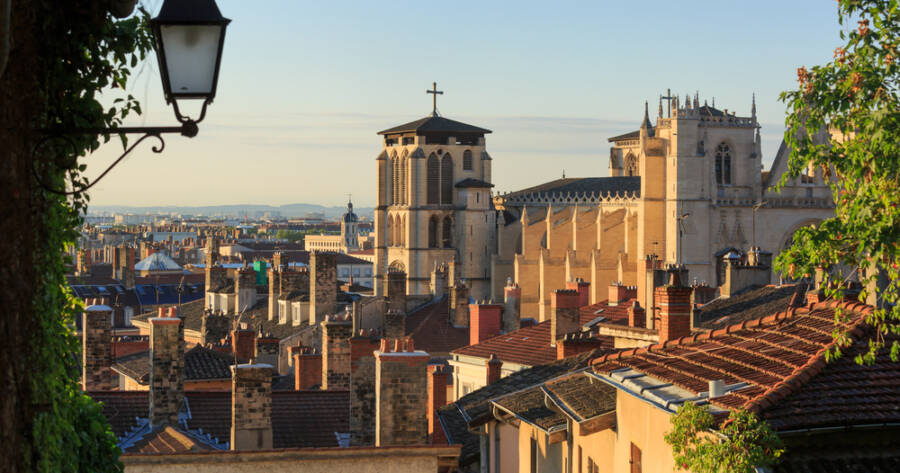
In France, Lyon earns serious attention from food enthusiasts — the city is home to more than 4,000 restaurants and 22 Michelin stars, establishing it as one of the most significant dining destinations on the planet, reachable from Paris in just two hours by train (source). Paris may carry the reputation, but Lyon delivers the plate.
Portugal’s Porto offers a similarly compelling case against defaulting to Lisbon. Porto is more intimate in scale, its historic buildings adorned with the colorful decorative tiles the country is famous for, and it is home to the legendary bookshop Livraria Lello, widely believed to have inspired J.K. Rowling (source). Meanwhile, in Germany, Munich stands as a city that rewards visitors with world-class museums, upscale shopping, inventive dining, and one of the largest beer gardens on earth — the Hirschgarten, which accommodates 8,000 guests — alongside the sweeping Englischer Garten, a green space that rivals New York’s Central Park in scale and ambition (source).
Rotterdam, often overlooked in favor of Amsterdam, tells one of Europe’s most striking urban stories. Extensively bombed during World War II, the city rebuilt itself through bold, experimental architecture and today hosts the largest port in all of Europe, giving it a cosmopolitan energy that feels entirely different from the canal-lined charm of its more famous neighbor (source). To the north, Bergen in Norway wraps a vibrant city center inside a landscape of mountains and fjords, where travelers can shift from urban cafes to mountain trails, kayaking routes, and a cable car ascent up Floyen for sweeping panoramic views — all within the same afternoon (source).
Leipzig, often discussed as the natural heir to Berlin’s creative reputation, has attracted a wave of artists and musicians priced out of the capital. Its club scene is substantial, its galleries and museums are impressive, and its musical heritage runs deep — all without Berlin’s level of tourist saturation (source). Across the French border from Paris, Marseille offers the cafés, museums, and storied architecture that define a great European city, but with a working Mediterranean harbor as its backdrop and a noticeably smaller price tag attached to nearly everything (source).
Second Cities Beyond Europe
Japan’s Osaka routinely ranks among the top cities in global liveability assessments and has earned a strong reputation as the country’s premier food destination. For visitors wanting a concentrated experience of Japan’s culture — a feudal castle, traditional street markets, and dramatic modern skyscrapers all in close proximity — Osaka delivers that in a way few cities can match (source).
In North America, Chicago carries its secondary status almost as a badge of honor — the city’s official nickname is literally “The Second City.” Yet there is nothing secondary about what it offers: a stunning lakefront skyline along Lake Michigan, the celebrated Shedd Aquarium, the Chicago Art Institute, and a riverside architectural tour that draws visitors from around the world (source). Further south, San Antonio stands out among American destinations for its lively River Walk — a stretch of hotels, restaurants, and museums threading through the city — as well as its distinction of hosting the only UNESCO World Heritage site in the entire state of Texas, the San Antonio Missions National Historic Park (source).
Guadalajara, often bypassed by travelers heading straight to Mexico City, brings its own cultural weight. Recognized globally as the birthplace of mariachi music, it pairs affordability and cultural richness with easy access to nearby Tequila — the town, not just the drink — and the artisan village of Tlaquepaque (source). It is the kind of destination that rewards curiosity over convention.
Why the Second Choice Is Often the First Experience
There is a pattern across all of these cities: the places that draw the most tourists are not always the places that leave the deepest impression. Second cities consistently offer travelers more space to explore, deeper local engagement, and often a more honest reflection of what a country’s culture actually looks and tastes like on an everyday level. The food is real, the crowds are manageable, and the sense of discovery remains intact in ways that the world’s most-visited capitals can struggle to provide.
Why You Should Learn More About Underrated Second Cities
Travelers who look beyond the obvious capitals consistently find destinations that reward them with richer experiences, lower costs, and a more genuine connection to local culture. Whether it’s a food-forward European city, a creative hub that has outgrown its capital’s shadow, or an American destination with deep historical roots, second cities offer something the headline destinations can rarely replicate: the feeling of discovery. Exploring these alternatives is one of the most effective ways to deepen any travel experience and see a country as it truly is, rather than through the polished lens of mass tourism.