

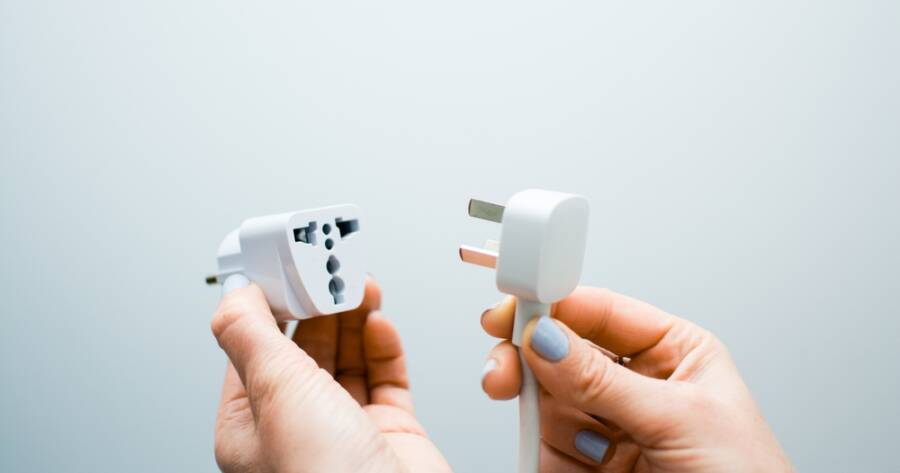
A multi-country itinerary can quickly become complicated when every destination uses a different electrical outlet. A universal travel adapter reduces the number of individual plug adapters travelers need to pack while also creating convenient charging points for phones, tablets, headphones, cameras, and some laptops. The best choice depends on charging power, USB port selection, size, and destination compatibility. Fortunately, several options address different travel styles, from lightweight vacations to device-heavy international business trips.
What to Look for in a Universal Travel Adapter
For travelers from the United States, destination coverage should be the first consideration. Many all-in-one adapters combine Type A, C, G, and I plugs, covering common outlets found across North America, much of Europe, the United Kingdom, Australia, New Zealand, and numerous destinations in Asia. Coverage is not literally universal, however. Countries or individual properties may use plug types that an all-in-one unit does not accommodate, so checking every stop on an itinerary remains important.
USB configuration matters just as much. Travelers who mostly carry phones, earbuds, and watches may be satisfied with modest USB-C output, while someone who wants to charge a compatible laptop directly from the adapter may benefit from greater USB-C Power Delivery capacity. It is also useful to count how many devices will realistically need power at the same time. An adapter with several ports can reduce the number of separate wall chargers and cables occupying limited hotel outlets.
1. EPICKA TA-105S for a Balanced Mix of Ports
The EPICKA TA-105S is a practical middle-ground option for travelers who want several USB connections without moving into the highest-output category. It combines three USB-C ports, two USB-A ports, and one universal AC outlet, with up to 45W of charging output. Four built-in plug types provide coverage across more than 200 countries and regions. That combination makes it useful for travelers carrying a mixture of newer USB-C electronics and older accessories that still rely on USB-A.
The six-device configuration can also simplify a crowded hotel nightstand. A phone, smartwatch, power bank, tablet, and another USB accessory can share one adapter while the AC outlet remains available for a compatible plug-in device. Its 45W ceiling means travelers with demanding laptops should check their charging requirements before depending on it as their primary charger, but the port selection gives it considerable flexibility for everyday electronics.
2. EPICKA Air 40W for Lighter Packing
Travelers who prioritize packing space may prefer the EPICKA Air 40W. It uses the same general multi-country concept but emphasizes a slimmer, lighter configuration. The adapter provides three USB-C ports, one USB-A port, one AC outlet, and up to 40W output. Its built-in four-plug design covers more than 200 countries and regions, while the listed weight is approximately four ounces.
This arrangement is particularly appealing for travelers whose equipment has largely transitioned to USB-C. Rather than dedicating space to several USB-A connections that may go unused, the Air 40W gives most of its charging ports to the newer connector. Its comparatively compact design also makes it easier to carry during the day if charging may be necessary at airports, coworking spaces, train stations, or cafés instead of exclusively at a hotel.
3. Ceptics UP-70KU for Higher-Powered USB-C Charging
The Ceptics UP-70KU is designed for travelers who need to charge several devices from a single wall outlet. It combines one universal AC socket with two USB-A ports and three USB-C ports, allowing up to six devices to be connected at once. One USB-C port supports up to 70W Power Delivery and Quick Charge output when used under supported conditions, while the other two USB-C ports are rated at up to 15W each. When the USB ports are used together, their combined output is limited to 60W.
Four slide-out plug types—Type A, C, G, and I—make the adapter compatible with outlets in more than 200 countries and regions. The unit also includes safety shutters, a replaceable fuse, and a spare fuse. Because charging output is shared when multiple USB devices are connected, travelers who need the full 70W capability for a compatible laptop or other high-power device should account for what else is plugged into the adapter at the same time.
4. SKROSS MUV USB AC65PD for Laptop and Phone Charging
The SKROSS MUV USB AC65PD combines an international travel adapter with one USB-C port and one USB-A port, making it suitable for travelers carrying a laptop alongside smaller electronics. When used by itself, the USB-C connection supports up to 65W Power Delivery, while the USB-A port supports up to 18W. When both USB ports are used simultaneously, the USB-C output is limited to 45W and the USB-A output to 12W.
The adapter can also power an unearthed two-pole device while its USB connections are being used, giving travelers another option for consolidating charging equipment. It accepts 100–250V AC input, includes a replaceable 2.5A fuse and USB-C cable, and weighs 224 grams. It does not convert voltage, so any appliance connected through the AC portion still needs to support the electrical supply at the destination.
5. TESSAN 35W Universal Travel Adapter for Device-Heavy Trips
The TESSAN 35W Universal Travel Adapter is another option for travelers who need numerous charging connections rather than maximum power from a single port. Its 6-in-1 configuration combines one universal AC outlet with five USB ports and supports simultaneous connections for as many as six devices. The plug system accommodates common U.S., European, U.K., and Australian configurations.
A particularly useful variation incorporates a built-in USB-C cable alongside additional USB-C and USB-A connections, with up to 35W available from the primary USB-C charging connection when it is used by itself. That setup can work well for couples or families sharing chargers because several phones and accessories can connect around one outlet. It is also useful for travelers carrying a broad assortment of electronics but who do not require the higher charging output offered by some laptop-focused adapters.
Remember That an Adapter Is Not Necessarily a Voltage Converter
One of the most important distinctions on an international trip is the difference between plug compatibility and voltage compatibility. An adapter allows one physical plug format to connect to another type of wall socket; it should not be assumed to transform the electricity supplied by that outlet.
Before connecting a device, travelers should check the voltage information printed on the device, charger, power brick, or manufacturer documentation. This deserves particular attention with appliances such as hair dryers, curling tools, and other devices designed to produce substantial heat. Carrying an adapter that physically fits the socket does not by itself establish that the connected appliance can safely use the local electrical supply. Checking both plug type and voltage compatibility before departure is safer than discovering the difference after arriving.
Choosing the Right Adapter for the Itinerary
There is no single universal adapter that is automatically best for every trip. A traveler moving between several countries with a phone and a few accessories may place compactness above charging output. Someone working remotely may instead prioritize a 70W USB-C connection that can serve a compatible laptop. Families and couples can benefit from adapters with numerous simultaneous charging connections, while frequent travelers may appreciate details such as retractable cables that reduce loose accessories.
Destination sequence should also influence the decision. List each country on the itinerary, determine the plug types likely to be encountered, and confirm that the chosen adapter supports them before departure. Then consider how many electronics will be charged each night and which device requires the greatest power. Matching those practical requirements to the adapter is more useful than simply choosing the model with the largest number of ports.
One Adapter Can Simplify a Complicated Trip
A well-chosen universal travel adapter can remove one recurring inconvenience from a multi-country journey. Instead of carrying a collection of destination-specific adapters and several separate charging bricks, travelers can consolidate much of their charging equipment into one compact device. The EPICKA, Ceptics, SKROSS, and TESSAN options above each solve the problem differently, with varying emphasis on portability, USB-C power, port count, and integrated cables.
The final choice should reflect the actual itinerary and equipment being packed. Confirm plug compatibility for every destination, check the voltage requirements of each device, and choose enough charging capacity for the electronics that matter most. Doing that preparation before leaving the United States can create a simpler charging setup that remains useful as the trip moves from one country to the next.