

Maintaining good balance becomes increasingly important as we grow older, especially when navigating stairs, uneven sidewalks, or crowded spaces. Changes in muscle strength, coordination, and vision can make everyday movements more challenging, increasing the likelihood of falls. Fortunately, regular balance exercises can improve stability and help older adults remain confident on their feet. Several practical exercises can be performed at home with minimal equipment, making them accessible additions to a healthy aging routine.
1. Single-Leg Stands for Stability
Standing on one leg challenges your ability to maintain an upright position while relying on a smaller base of support. This exercise helps develop the coordination needed for everyday activities such as stepping over obstacles, putting on pants, or navigating uneven ground.
Begin by standing beside a sturdy countertop or facing a wall with your fingertips resting against it. Slowly lift one foot off the floor while keeping your hips level and your supporting knee slightly bent. Hold for five to ten seconds before lowering your foot. Repeat three times on each leg. Use support throughout the movement if necessary, and avoid attempting unsupported stands until you feel sufficiently stable (source).
2. Heel-to-Toe Walking for Better Coordination
Heel-to-toe walking challenges balance by narrowing the distance between your feet. It encourages controlled foot placement and helps develop the coordination needed to walk through narrow spaces or adjust your steps when navigating obstacles.
Stand upright near a wall or countertop, looking straight ahead rather than down at your feet. Place your right heel directly in front of your left toes, then move your left foot forward so its heel sits immediately ahead of your right toes (source). Continue alternating feet for at least five steps, moving slowly and deliberately. Keep your fingertips near the wall for additional stability. As your coordination improves, gradually increase the distance you walk.
3. Sideways Walking to Strengthen Movement Control
Most daily walking involves moving forward, but safely navigating furniture, crowded rooms, or narrow spaces often requires stepping sideways. Practicing lateral movements can improve coordination and help you become more comfortable changing direction.
Stand with your feet together and your knees slightly bent. Take a slow step to your right, then bring your left foot toward your right foot until your feet meet again. Continue for ten steps before repeating in the opposite direction. Maintain an upright posture and avoid allowing your hips to drop as you move. Practice beside a stable surface that provides support when needed (source).
4. Sit-to-Stand Exercises for Leg Strength
Strong leg muscles are essential for maintaining balance, particularly when transitioning between sitting and standing. Practicing this movement strengthens the thighs and buttocks, helping older adults perform everyday activities such as getting out of a chair with greater control.
Choose a sturdy chair and sit near the front of the seat, keeping your feet flat on the floor and approximately shoulder-width apart. With your back straight, lean slightly forward and slowly rise to a standing position, using your hands for support if necessary. Pause briefly before lowering yourself back into the chair with control. Begin with a few repetitions and gradually work toward 10 to 15 as your strength improves (source).
5. Step-Ups for Stair-Climbing Confidence
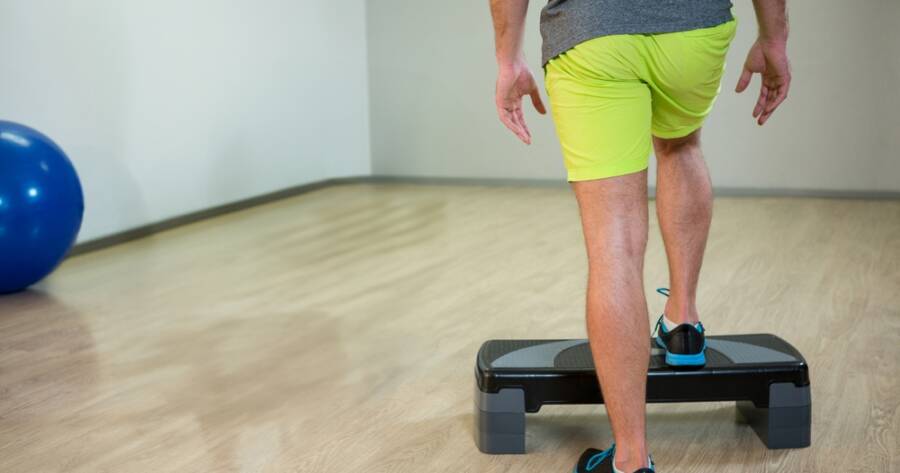
Climbing stairs requires a combination of leg strength, balance, and coordinated weight transfer. Step-ups practice these abilities in a controlled environment, making them particularly useful for older adults who regularly encounter stairs at home or in public places.
Stand facing a low, stable step with a secure railing available for support. Place your right foot onto the step, press through that foot, and bring your left foot up to join it. Carefully step back down, returning to the starting position. Complete up to five repetitions leading with each leg. Move slowly, avoiding sudden shifts in weight. Always use a handrail or nearby support rather than attempting the exercise on an unsupported platform (source).
6. Grapevine Walking for Lateral Coordination
Grapevine walking introduces crossing movements that challenge coordination and the ability to reposition your feet. Because the exercise is more complex than ordinary sideways walking, it is best suited to people who already feel comfortable with simpler balance activities.
Stand beside a wall with enough clear space to move sideways. Cross your right foot in front of your left foot, then bring your left foot alongside it. Continue with small, controlled crossing steps, aiming for five movements in each direction. Keep your fingertips against the wall if additional stability is needed. Avoid this exercise if crossing your feet makes you feel unsteady (source).
Building Better Balance Through Consistent Practice
Improving balance takes consistency, patience, and attention to safety. Start with exercises that match your current abilities, practice near stable support, and gradually increase repetitions as movements become easier. Balance training is most effective as part of a broader routine that also includes strength-building and regular physical activity.
Falls can have several contributing factors, including medication side effects, vision problems, and household hazards. Addressing these concerns alongside regular exercise provides a more complete prevention strategy (source). Anyone experiencing frequent falls, dizziness, or significant difficulty standing should consult a healthcare professional before starting. With appropriate precautions and steady practice, balance exercises can support safer movement and greater independence after 60.