

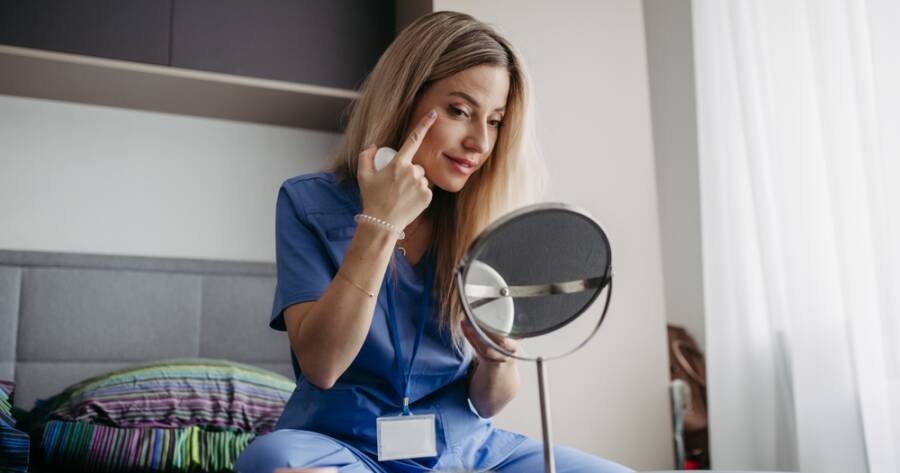
Long shifts demand makeup that can keep up — and for nurses, food service workers, and other professionals on their feet all day, the right products and techniques make all the difference between a polished look at hour one and a faded one by hour twelve.
Why Long-Shift Makeup Is Its Own Category
A standard makeup routine designed for a desk job often fails spectacularly in high-intensity work environments. Healthcare and service workers face unique challenges: extended hours, physical exertion, humidity, sweat, and — for many in medical settings — face masks worn throughout the day. These conditions break down even premium products faster than normal wear would. That’s why workers in these fields have developed their own set of strategies, product preferences, and layering techniques that go far beyond typical beauty routines.
For nurses especially, the face mask factor adds a layer of complexity. The American Academy of Dermatology notes that makeup worn beneath a mask is more likely to clog pores and contribute to breakouts, which is why dermatologists specifically recommend choosing only products labeled “non-comedogenic” or “won’t clog pores” (source). That single product-selection shift can meaningfully change how skin holds up over the course of a long day.
Building the Right Base
Every long-lasting makeup look starts well before the first product touches skin. A consistent skincare routine — particularly moisturizing — lays the groundwork for makeup that stays put. Dermatologists advise applying a fragrance-free, non-comedogenic moisturizer right after washing the face, creating a protective barrier that also reduces dryness over extended hours (source).
Once skin is prepped, primer is the next critical step. Matching a primer to one’s specific skin type — oily, dry, or combination — creates a smooth surface that helps everything applied afterward adhere more effectively throughout the day (source). Skipping this step is one of the most common reasons a solid foundation starts breaking down around hour six.
Foundation selection matters just as much as technique. Lightweight, long-wear formulas — including options like Revlon ColorStay, which comes in a wide range of shades and is designed to stay on like a second layer of skin through extended shifts — are popular choices among nurses and other healthcare workers (source). The goal is coverage that looks natural without feeling heavy, because heavy product buildup tends to crease and shift more quickly under demanding conditions.
Layering Techniques That Actually Hold
The order in which products get applied — and how they’re set — plays a major role in how long a look lasts. When it comes to concealer, applying it after foundation and then pressing a translucent powder over the top creates a stronger hold than applying concealer directly to bare skin (source). This layering approach essentially locks the concealer in place.
Finishing with a translucent setting powder — such as a mineral veil variety — helps keep everything in position from the start of a shift through its final hours (source). For eye makeup specifically, switching to waterproof formulas for mascara, eyeliner, and brow products prevents the kind of smudging that often happens from sweat or eyes watering in a fast-paced environment (source).
A setting spray applied at the end of the routine is the final seal. Budget-friendly options — like NYX Cosmetics’ Dewy Finish Setting Spray — have earned enthusiastic reviews from nurses who credit them with keeping their look fresh from the first hour of a shift all the way through to the last (source).
Mid-Shift Touch-Up Strategies
Even the most carefully applied makeup benefits from occasional maintenance during a long shift. Blotting papers are a go-to tool — they absorb excess oil from the surface of the skin without disturbing the makeup underneath, making them far more effective than powdering over oily areas repeatedly (source).
Carrying a compact touch-up kit is a practical approach many experienced shift workers swear by. A small bag containing blotting papers, a lipstick or tinted balm, and a travel-sized setting spray covers most of the refresh needs that arise over a 10- to 12-hour day (source). Keeping it in a locker or bag means touch-ups take only a minute or two during a break.
For mask-wearers in particular, the American Academy of Dermatology recommends taking a mask break of roughly 15 minutes every four hours when it is safe to do so, giving skin a chance to breathe and reducing the buildup of moisture and friction that degrades both skin and makeup over time (source). Reusing masks also poses a risk — oil, makeup residue, and particles that collect on a worn mask can irritate skin when that mask is put on again (source).
The Product Mindset Shift for Shift Workers
One consistent theme across advice from healthcare and service workers is that long-shift makeup requires a deliberate change in mindset — not just a few product swaps. Every element, from the moisturizer applied before primer to the setting spray used as a final step, should be chosen with durability and skin health in mind. Products that feel comfortable at hour one need to still feel comfortable at hour twelve.
Non-comedogenic labeling is worth prioritizing across the entire routine, not just for foundation. Skincare and makeup products that don’t block pores reduce the risk of breakouts that can compound over weeks and months of regular mask-wearing and extended shifts. The cumulative effect of small, smart product choices adds up to significantly healthier skin and more consistent makeup performance over time.
Why Learning More About Long-Wear Makeup for Shift Workers Is Worth Your Time
Makeup that survives a 12-hour shift isn’t just about vanity — for many workers, it’s about confidence and professionalism in demanding environments. Selecting non-comedogenic, long-wear formulas, building a proper base with primer and moisturizer, layering products strategically, and keeping a small touch-up kit on hand are all practices that experienced shift workers have refined over time. Whether someone is new to long shifts or simply tired of products that fail by midday, investing attention in these routines pays off in both appearance and skin health throughout a long career.