

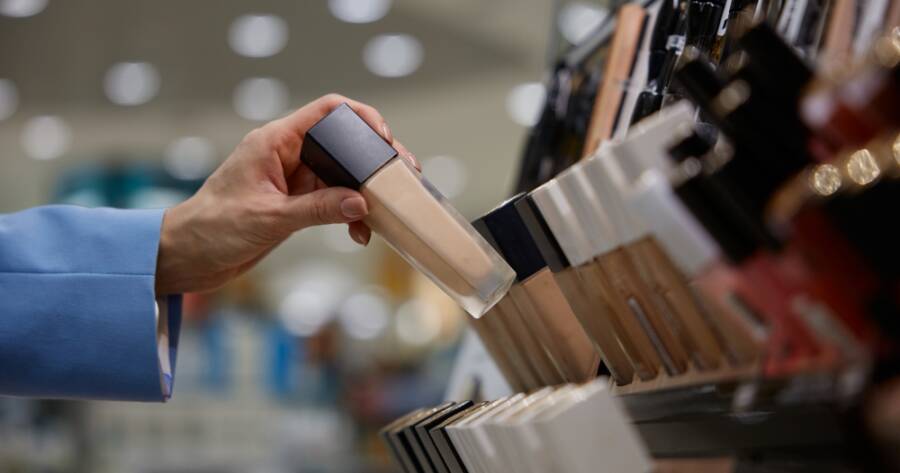
Foundation shopping should be straightforward, but for millions of people, finding a true match remains a frustrating challenge. Some brands have transformed the industry with genuinely expansive shade ranges, while others still lag far behind. Take a closer look at who is leading the charge and why it matters.
The Standard That Changed Everything
When Fenty Beauty arrived on the beauty scene in 2017, it did so with a foundation lineup that few in the industry had previously attempted at scale. The brand launched with 40 shades of its Pro Filt’r foundation, immediately signaling to consumers across every skin tone that their needs were worth addressing (source). That debut range has since grown to 50 shades, and the commercial response was overwhelming—the brand reached $100 million in sales within just 40 days of launch (source).
The success of Fenty Beauty sent a clear message to competitors: inclusive shade ranges are not a niche concern but a mainstream expectation. Before that moment, many brands treated deep and very deep complexions as an afterthought, offering perhaps a handful of options at the darker end of the spectrum. The Fenty effect forced a reckoning across the industry, pushing both luxury and drugstore brands to revisit and expand their offerings.
Brands Delivering Real Inclusivity
Several brands have stepped up with ranges that go beyond surface-level representation. Morphe’s Fluidity Full-Coverage Foundation launched with an ambitious 60 shades, organizing them into five distinct levels of lightness and darkness and further sorting each level by undertone subcategories (source). That kind of structural approach to shade organization reflects a deeper understanding of how skin tone diversity actually works—depth and undertone are two separate but equally important variables.
Pat McGrath Labs takes a similarly thoughtful approach with its Sublime Perfection Foundation, offering 36 shades that span the full complexion spectrum while distinguishing between peach, pink, yellow, golden, red, olive, and neutral undertones (source). The specificity of those undertone distinctions reflects what many makeup artists and beauty advocates have long called for: not just more shades, but more nuanced ones.
At the drugstore level, Maybelline New York’s Fit Me Matte + Poreless Foundation offers 40 shades spanning from Fair Porcelain to Espresso—a range that effectively quadruples the roughly 10-shade count that remained standard among many mass-market brands for years (source). Accessible price points combined with a genuinely broad range make this a standout achievement in the drugstore space. Meanwhile, APDG’s Longwear Liquid Pigments attracted significant attention online for its 33-shade lineup, notable for dedicating roughly half its shades specifically to deeper skin tones, including some of the most extreme depths available anywhere on the market (source).
Why Shade Range Is About More Than Counting Colors
One of the most common misconceptions in the foundation conversation is that a high shade count automatically equals inclusivity. Creator Golloria George challenges that assumption directly, stating: “An inclusive shade range doesn’t just mean checking off boxes from fair to deep — it means taking the time to understand undertones, depth, and nuance across all skin tones” (source). A brand can list 50 shades on its website while still failing customers who have cool or warm undertones at the deeper end of the spectrum.
From a formulation standpoint, the barriers to building a comprehensive range are lower than many assume. Cosmetic chemist Javon Ford has pointed out that producing well-matched shades across the full human complexion range does not actually require significantly greater cost—standard pigments such as red, yellow, and black iron oxides combined with titanium oxide can address the vast majority of skin tones when used thoughtfully (source). The issue, then, is often one of intention rather than technical limitation.
The Business Case Is Undeniable
Some brands have historically treated deep-shade consumers as a secondary market, but the data does not support that logic. Black consumer spending in beauty and related categories reached $9.4 billion in 2023, outpacing overall U.S. household spending growth and making the argument that darker shades are commercially unviable increasingly difficult to sustain (source).
Consumer sentiment reinforces this further. Research from Savanta found that nearly one in three U.S. shoppers reported they would actively choose not to purchase from a brand that fails to demonstrate a commitment to diversity, equity, and inclusion (source). As younger shoppers enter the market, those expectations are only intensifying. A 2023 Mintel report found that 38% of Gen Z beauty consumers expressed interest in gender-inclusive products, indicating that the broader definition of inclusivity continues to expand well beyond shade range alone (source).
Retailer accountability is also becoming part of the conversation. Sephora made a public commitment through the Fifteen Percent Pledge to allocate 15% of its shelf space to Black-owned beauty brands, though observers note that transparency around how that pledge is being tracked and fulfilled remains limited (source). Retail visibility and shelf placement matter enormously for emerging brands that have already done the hard work of creating inclusive products but struggle to reach consumers without that platform.
What Separates Leaders From Laggards
The brands consistently recognized for getting shade inclusivity right share a few traits in common. They invest in undertone diversity, not just shade depth. They formulate with the full human complexion range in mind from the outset rather than expanding incrementally. And they treat deep skin tone consumers as a core audience rather than an expansion opportunity. The contrast with brands that still offer limited options is stark, and consumers with deeper complexions are increasingly vocal about holding brands accountable.
Social media has accelerated this accountability significantly. Creators testing products in real time, showing what a foundation actually looks like on deep skin tones, have repeatedly exposed the gap between a brand’s marketing imagery and the reality of its shade performance. That kind of visibility has proven far more influential than traditional beauty advertising in shaping purchasing decisions—and it has pushed more brands to invest in genuine formulation work rather than performative range extensions.
Why You Should Learn More About Inclusive Foundation Shade Ranges
Understanding which brands prioritize true shade inclusivity empowers consumers to make purchases that align with their values and their complexion needs. The distinction between a broad shade count and a genuinely inclusive range—one that accounts for undertone variation, depth nuance, and formulation quality—is critical for anyone navigating the foundation market. As industry standards continue to evolve, staying informed about which brands are setting the bar and which are simply following it makes a meaningful difference in what ends up in a beauty routine. The foundation market has changed dramatically in recent years, and the brands leading that change have demonstrated that inclusivity and commercial success are not competing priorities—they reinforce each other.